Europe's latest heatwave has become more than a climate story—it has exposed a growing challenge for the continent's energy system. As temperatures climbed above 40°C across France, Spain, Germany and other countries in late June, electricity demand surged while power generation simultaneously declined, pushing wholesale electricity prices to unprecedented levels and reinforcing the importance of battery energy storage systems (BESS).

A Triple Challenge for Europe's Power Grid
Extreme heat creates what many energy analysts describe as a "triple squeeze" on the electricity system.
First, electricity demand surges. Cooling loads from air conditioning, data centers and commercial buildings rise rapidly during prolonged heatwaves. Studies suggest electricity demand increases by around 2–3% for every 1°C rise in temperature, placing significant pressure on power grids during peak hours.
Second, conventional power plants become less efficient. Higher ambient temperatures reduce the thermodynamic efficiency of thermal generation. As turbine back pressure increases, more fuel is needed to produce the same electricity, with plant efficiency potentially falling by 10–15% during extreme heat.
Third, power plants are forced to reduce output. Nuclear and fossil-fuel stations rely on river water for cooling. As water temperatures rise, cooling becomes less effective and environmental limits restrict heat discharge, forcing operators to reduce generation or temporarily shut down units.
Renewable generation also adds to market volatility. According to recent industry reports, several European electricity markets experienced extraordinary price volatility during the heatwave. Daytime electricity prices fell close to or even below zero due to abundant solar generation, yet within hours after sunset, prices in markets such as Belgium, Germany and the Netherlands surged to several hundred euros—and in some cases exceeded €1,000/MWh.
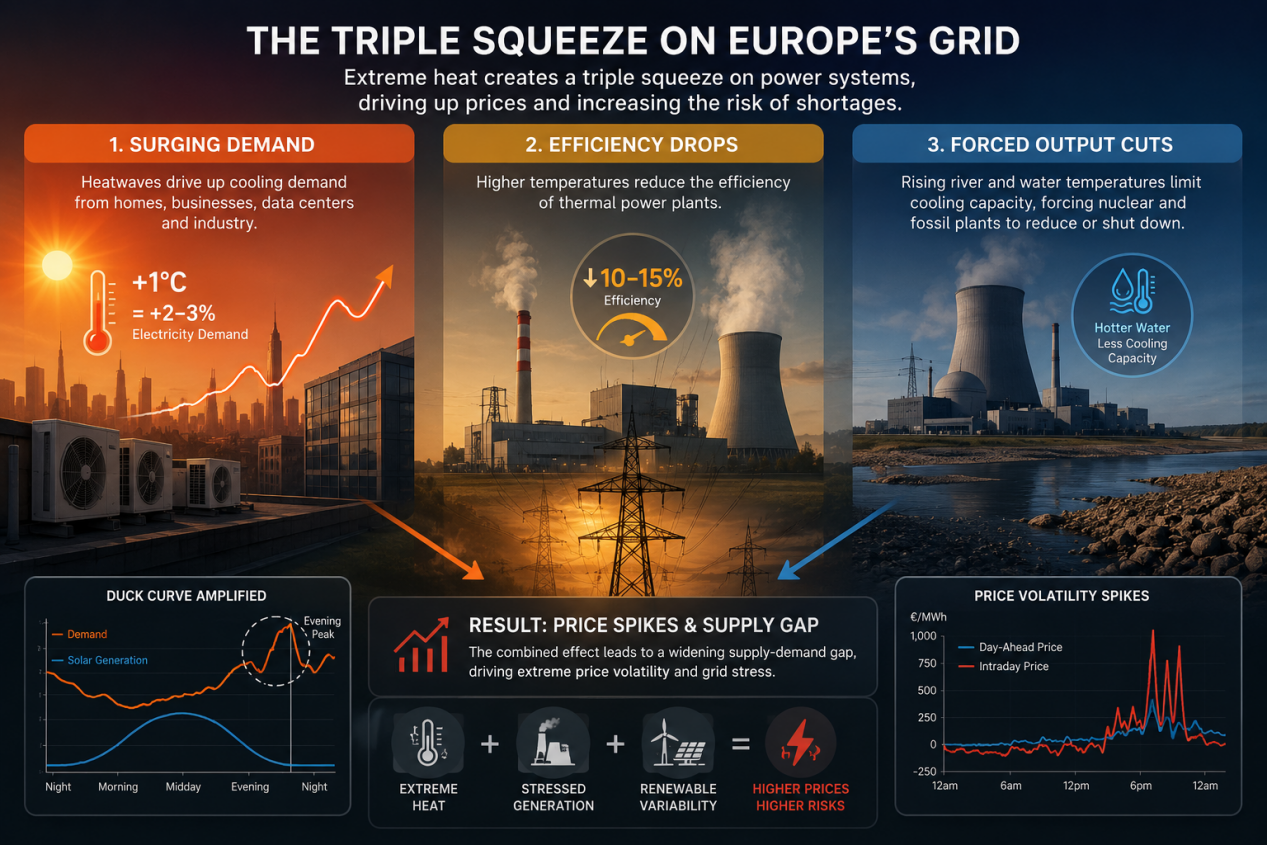
The result is a widening supply-demand imbalance during the critical evening hours, creating the now-familiar "duck curve" across many European electricity markets—and reinforcing the growing need for battery energy storage to balance renewable generation with electricity demand.
Why Battery Storage Is Becoming Essential
The latest heatwave once again demonstrated that battery storage is no longer simply an accessory to renewable energy—it is becoming essential infrastructure for modern power systems.
Battery energy storage enables excess solar electricity generated during midday to be stored and dispatched during the evening peak, reducing reliance on expensive peaking plants while easing pressure on transmission networks. It also helps stabilize electricity prices, provides fast frequency regulation services, and improves overall grid resilience during extreme weather events.
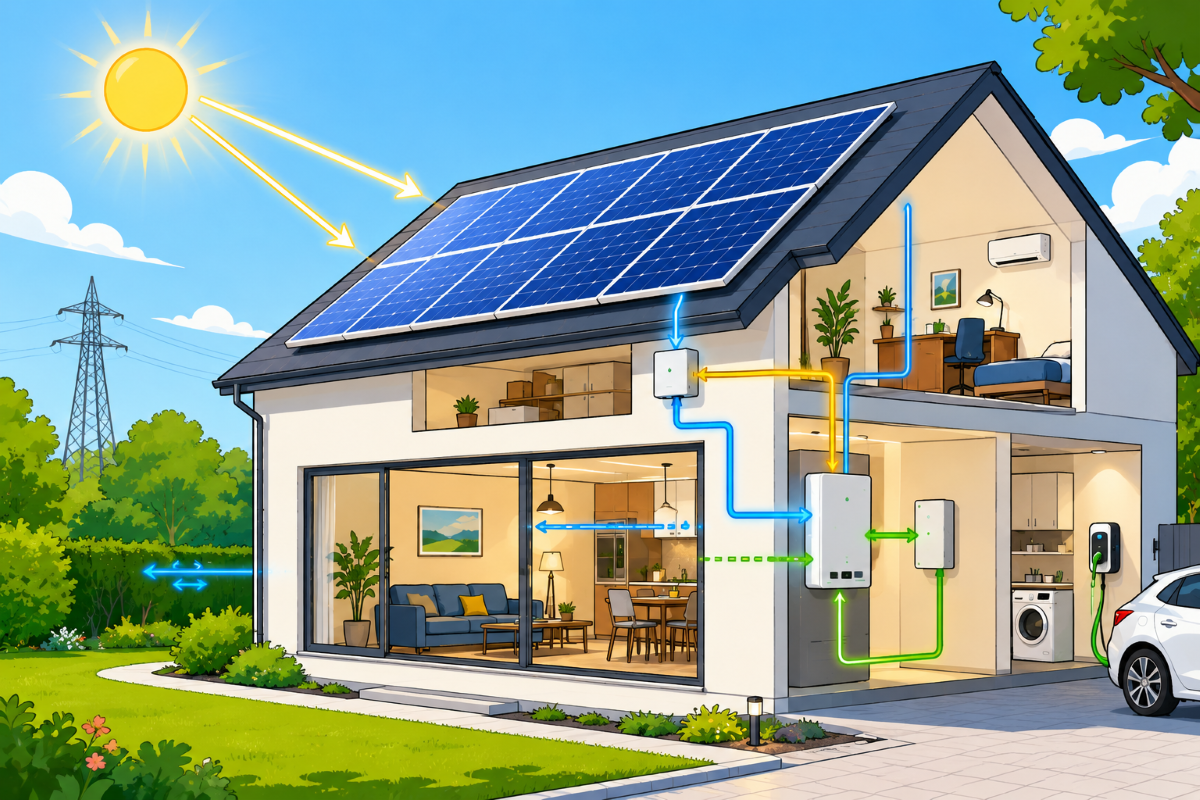
As Europe accelerates renewable deployment, experts increasingly view storage as the missing link that enables greater flexibility across the power system.
Building More Resilient Energy Systems with ZETATECH in Europe
As climate extremes become more frequent, the future of energy lies not only in generating clean electricity, but also in using it more intelligently.
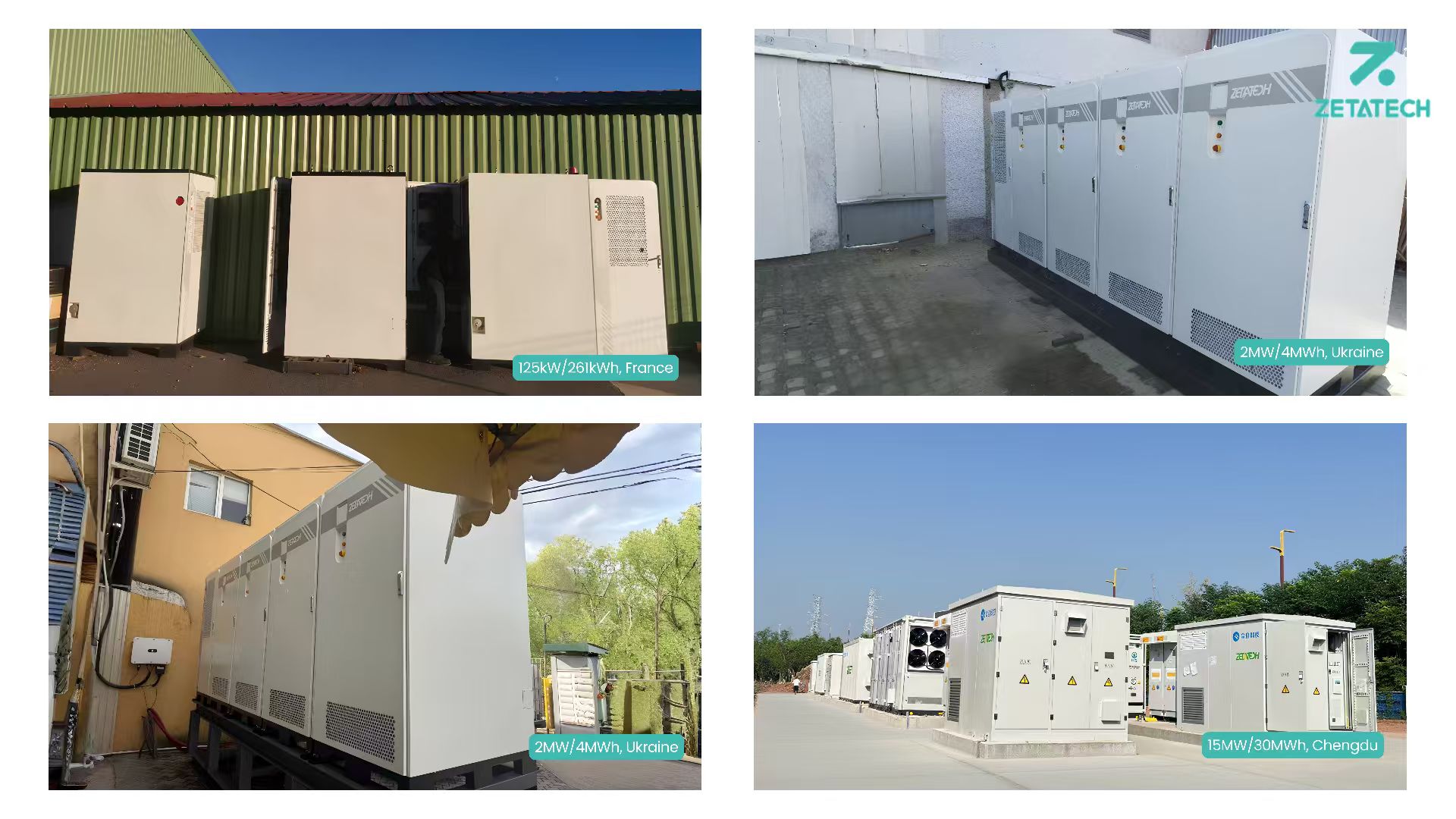
Across Europe—including Poland, Ukraine, and the Netherlands—ZETATECH has delivered energy storage solutions tailored to diverse grid conditions and commercial applications. Combined with our microgrid expertise, these solutions help businesses integrate solar power, strengthen operational resilience and prepare for an increasingly electrified future.
Europe's recent heatwave serves as a reminder that energy storage is no longer a technology for tomorrow. It is becoming a cornerstone of climate adaptation, grid stability and sustainable energy development today.