A Recent Fire in Germany Highlights the Challenges of BESS Safety
On July 21, 2026, a lithium-ion battery energy storage facility in Bautzen, Saxony, Germany, caught fire, providing a timely reminder of the safety challenges facing the rapidly expanding BESS industry. The facility consisted of four battery storage containers with a total capacity of approximately 1.5 MW and was designed to support local grid stability. Following the outbreak of the fire, the system was promptly disconnected from the grid, preventing the incident from disrupting the wider electricity supply.
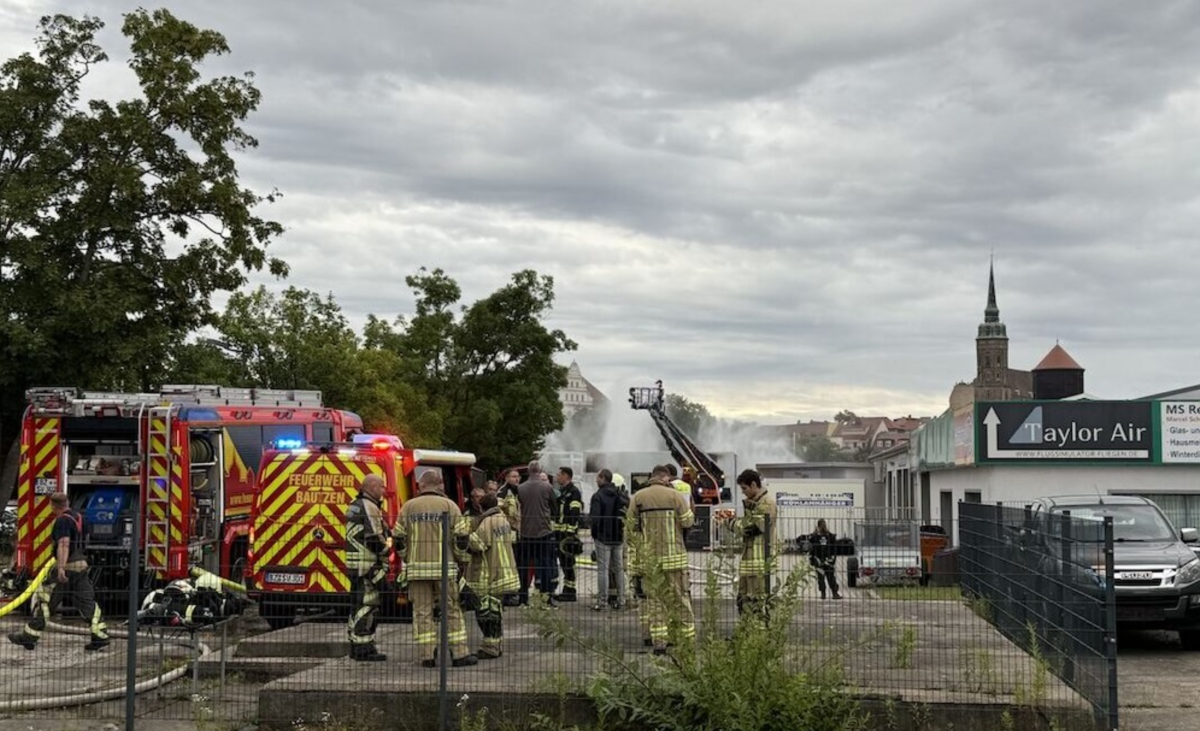
Firefighters faced significant challenges in controlling the incident. Unlike conventional fires, lithium-ion battery fires can involve thermal runaway, prolonged heat generation, and the risk of reignition, requiring continuous cooling and extended monitoring. Specialized firefighting measures were therefore used to control the affected containers and prevent further escalation. As a precaution, nearby residents were temporarily evacuated, while authorities also monitored air quality and the surrounding environment.
The exact cause of the Bautzen fire remains under investigation. Nevertheless, the incident highlights a critical question for the energy storage industry: When a severe thermal event occurs, can the system contain the consequences before they spread beyond the affected unit?
The answer depends on much more than the battery cell itself.
Why Do Large-Scale Battery Energy Storage Systems Catch Fire?
Publicly available investigations show that BESS fires rarely result from a single failure. Instead, they can involve a combination of cell defects, electrical faults, thermal management issues, control-system failures, installation problems, and inadequate fire protection.
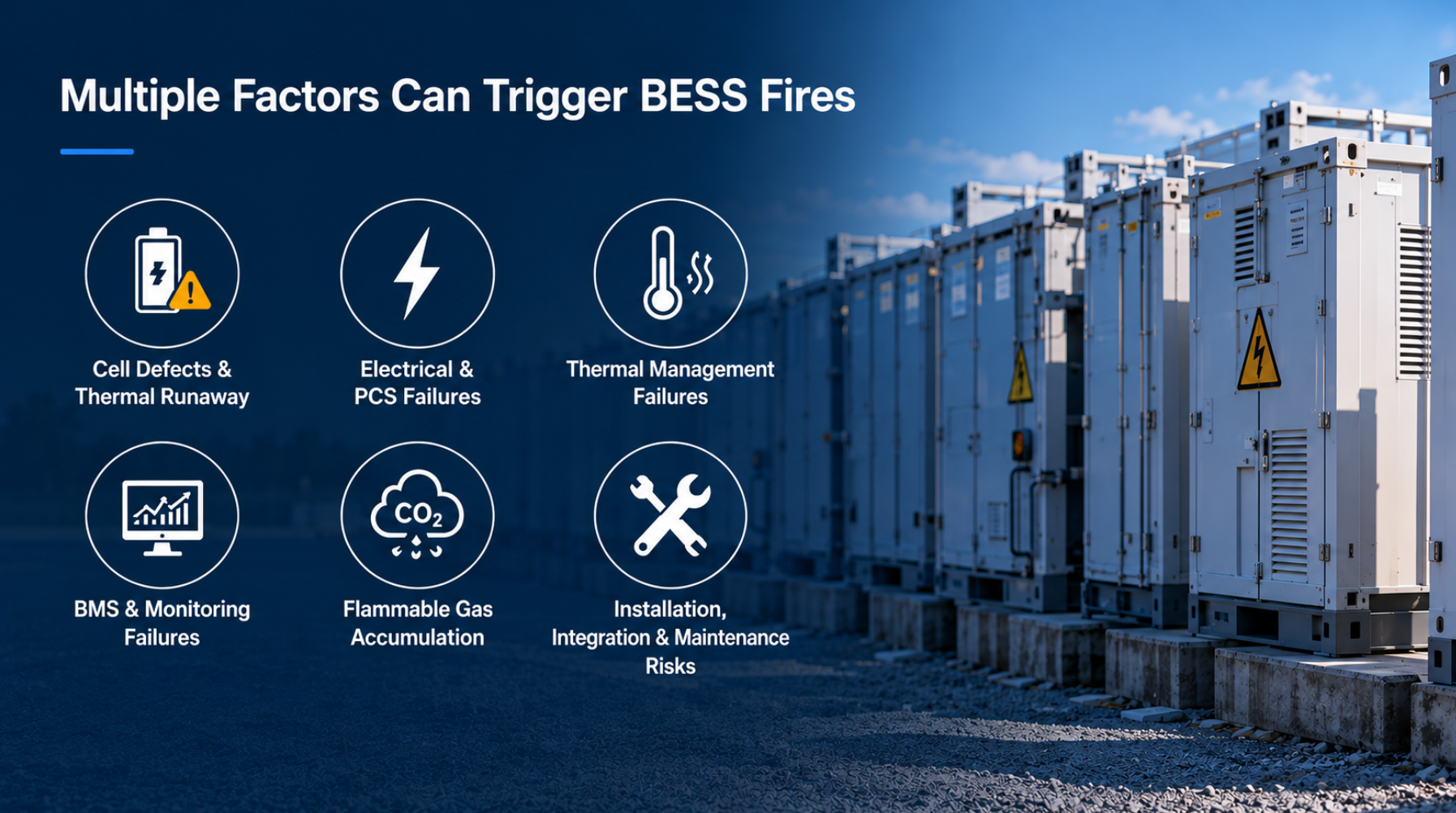
The main risk factors include:
1. Cell Defects and Thermal Runaway
Internal short circuits, manufacturing defects, aging, or abnormal electrical conditions can cause cells to overheat and enter thermal runaway, potentially releasing heat and flammable gases.
2. Electrical and PCS Failures
Short circuits, insulation failures, abnormal currents, or faults involving PCS, cables, switchgear, and other electrical equipment can generate excessive heat and initiate a thermal event.
3. Thermal Management Failures
Cooling-system failures can cause localized overheating, while liquid-cooling leaks may introduce additional electrical risks. The Victorian Big Battery incident in Australia, for example, was linked to a cooling-system leak that caused a short circuit and ultimately triggered thermal runaway.
4. BMS and Monitoring Failures
BMS, sensors, and control systems are responsible for detecting abnormal temperature, voltage, and current conditions. If an abnormal event is not detected or isolated quickly enough, a localized failure can escalate.
5. Flammable Gas Accumulation
Thermal runaway can release flammable gases before visible flames appear. At the McMicken Energy Storage Facility in Arizona, the 2019 incident highlighted the dangers associated with gas accumulation and subsequent deflagration inside an enclosed battery system.
6. Installation, Integration, and Maintenance Risks
Incorrect installation, inadequate electrical connections, insufficient separation, commissioning problems, or inadequate maintenance can introduce additional risks. This highlights why BESS safety must be managed throughout the entire lifecycle—not only at the battery manufacturing stage.
These incidents demonstrate that BESS safety is a system-level challenge. A failure may begin with a single cell or component, but its ultimate consequences depend on how effectively the system can detect, isolate, suppress, vent, and contain the event.
Thus, customers nowadays are asking more practical questions than ever before:
• Can thermal runaway remain confined to a single container?
• Will neighboring energy storage units remain protected?
• Does the system provide sufficient time for emergency response?
• Can the project meet increasingly stringent safety and insurance requirements?
These questions explain why traditional component-level safety testing, while essential, cannot provide the complete picture.
Why Traditional Battery Safety Tests Are No Longer Enough
International standards such as UL 9540A have become a key method for evaluating thermal runaway fire propagation in battery energy storage systems. The methodology provides data on factors such as thermal behavior, gas generation, flame propagation, and fire performance under defined test conditions. UL 9540A is also explicitly referenced by NFPA 855 for large-scale fire testing.
However, today's utility-scale energy storage installations often consist of dozens—or even hundreds—of battery containers installed relatively close to one another.Under these real-world conditions, stakeholders need to understand not only what happens inside one battery unit, but also what happens to the surrounding system when a fire develops.
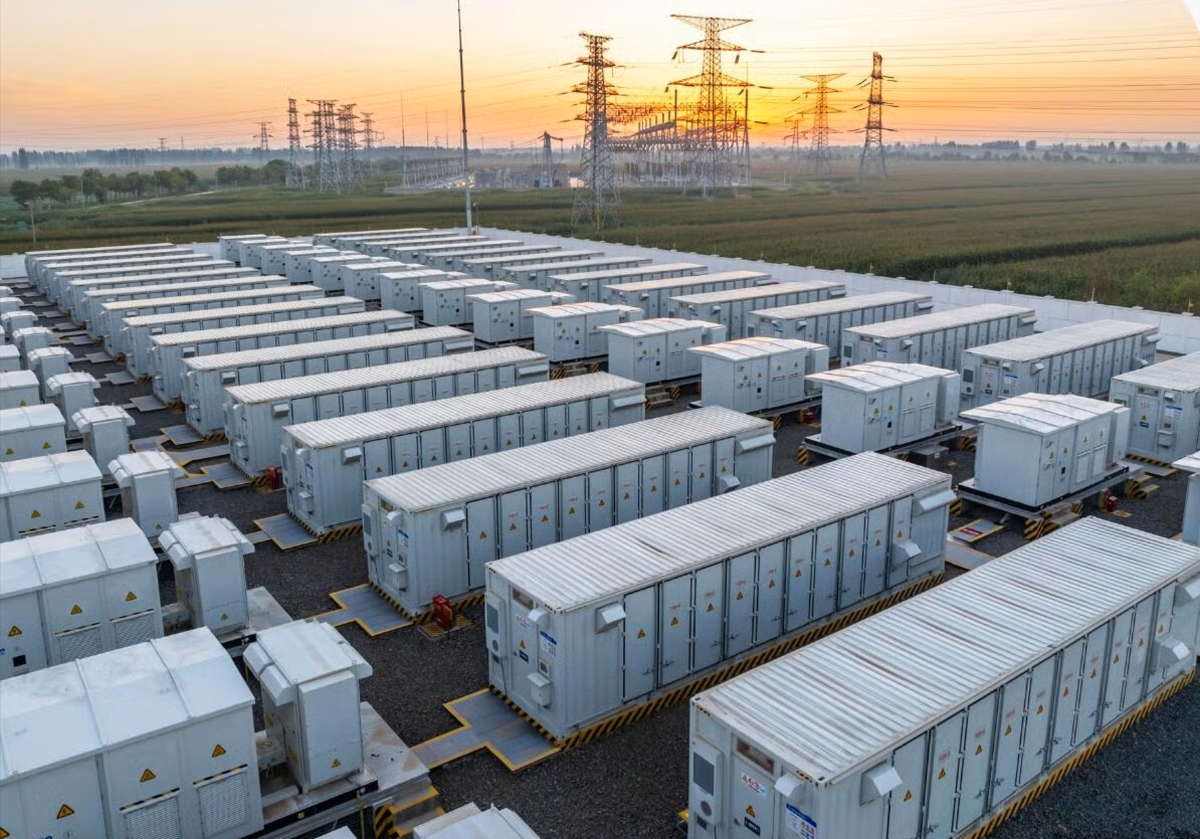
This is where Large-Scale Fire Testing (LSFT) becomes increasingly important. Large-scale fire testing evaluates a complete BESS under a developed fire scenario and can examine flame spread, heat release, gas emissions, suppression performance, separation distances, and the potential for fire propagation to neighboring systems.
The objective is not simply to demonstrate that a battery cannot burn. Instead, it is to answer a more practical question: If a battery fire occurs, can the system contain the consequences and prevent the event from escalating?
What Happens During a Large-Scale Fire Test?
Contrary to popular perception, a large-scale fire test is not simply about igniting a battery container and observing how long it burns. Instead, it is a carefully engineered validation process designed to simulate a severe thermal runaway fire condition and evaluate the behavior of the complete BESS.
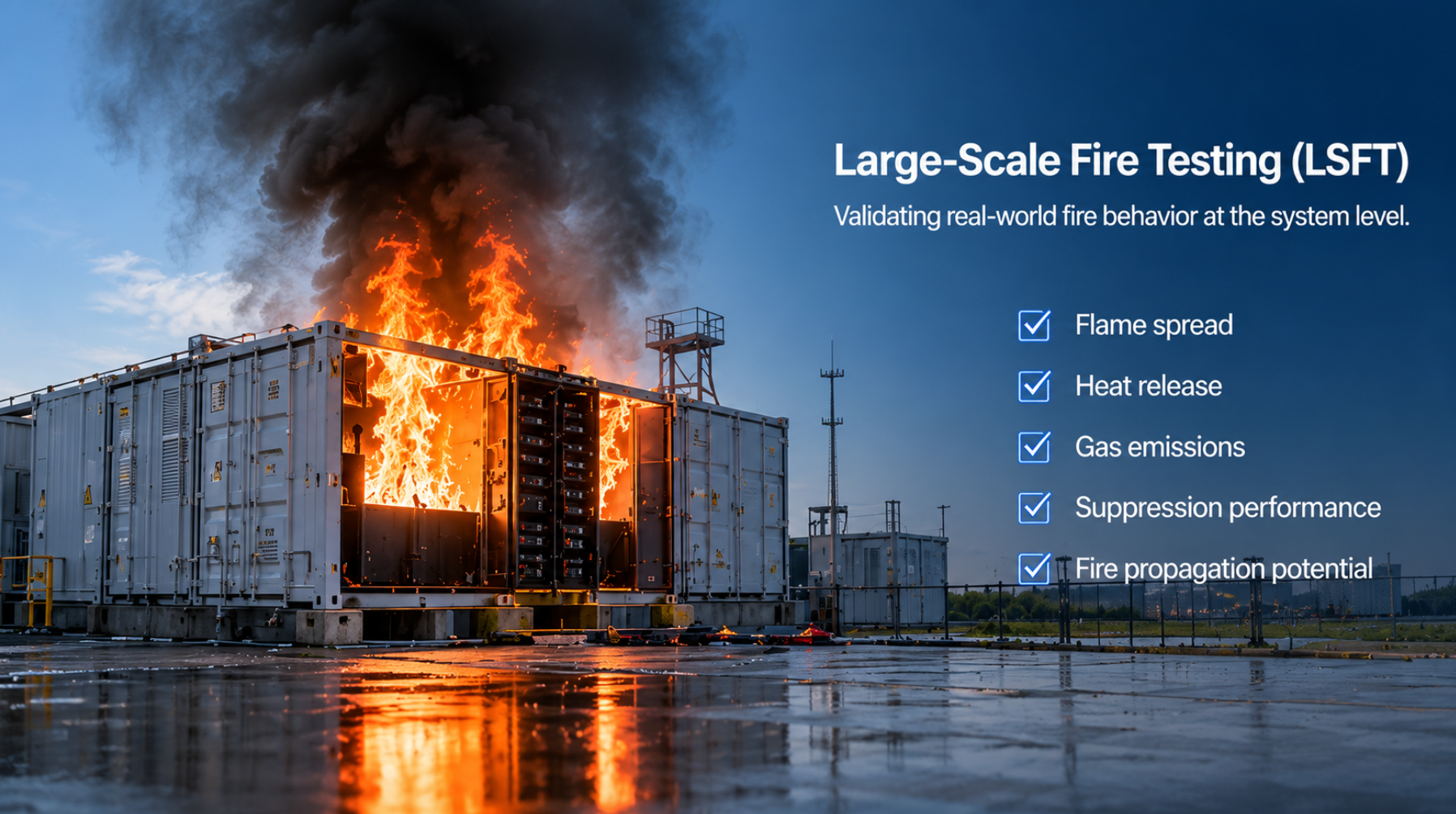
Typical test conditions include:
• A fully charged battery system operating at 100% State of Charge (SOC)
• Intentional initiation of thermal runaway within one container
• Active fire suppression systems inside the initiating container disabled
• Adjacent containers positioned at realistic project spacing
• Continuous monitoring of temperature, heat flux, gas concentration, structural deformation, and fire propagation
Rather than focusing on whether flames are visible, engineers evaluate whether the system can:
• Limit thermal propagation to neighboring containers
• Maintain structural integrity under prolonged heat exposure
• Manage pressure and flammable gases
• Control flame spread and heat transfer
• Protect surrounding equipment
• Provide useful data for emergency response and site planning
Therefore, the value of an LSFT is not simply the final visual outcome. The test conditions, methodology, measured data, and applicability to the actual project configuration are equally important.
Safety Begins Long Before the Fire Test
Recognizing the importance of real-world, system-level validation, ZETATECH plans to conduct a large-scale fire test for its Xcube utility-scale battery energy storage system by the end of 2026. The test will provide further data to validate Xcube's safety architecture and performance under extreme conditions.
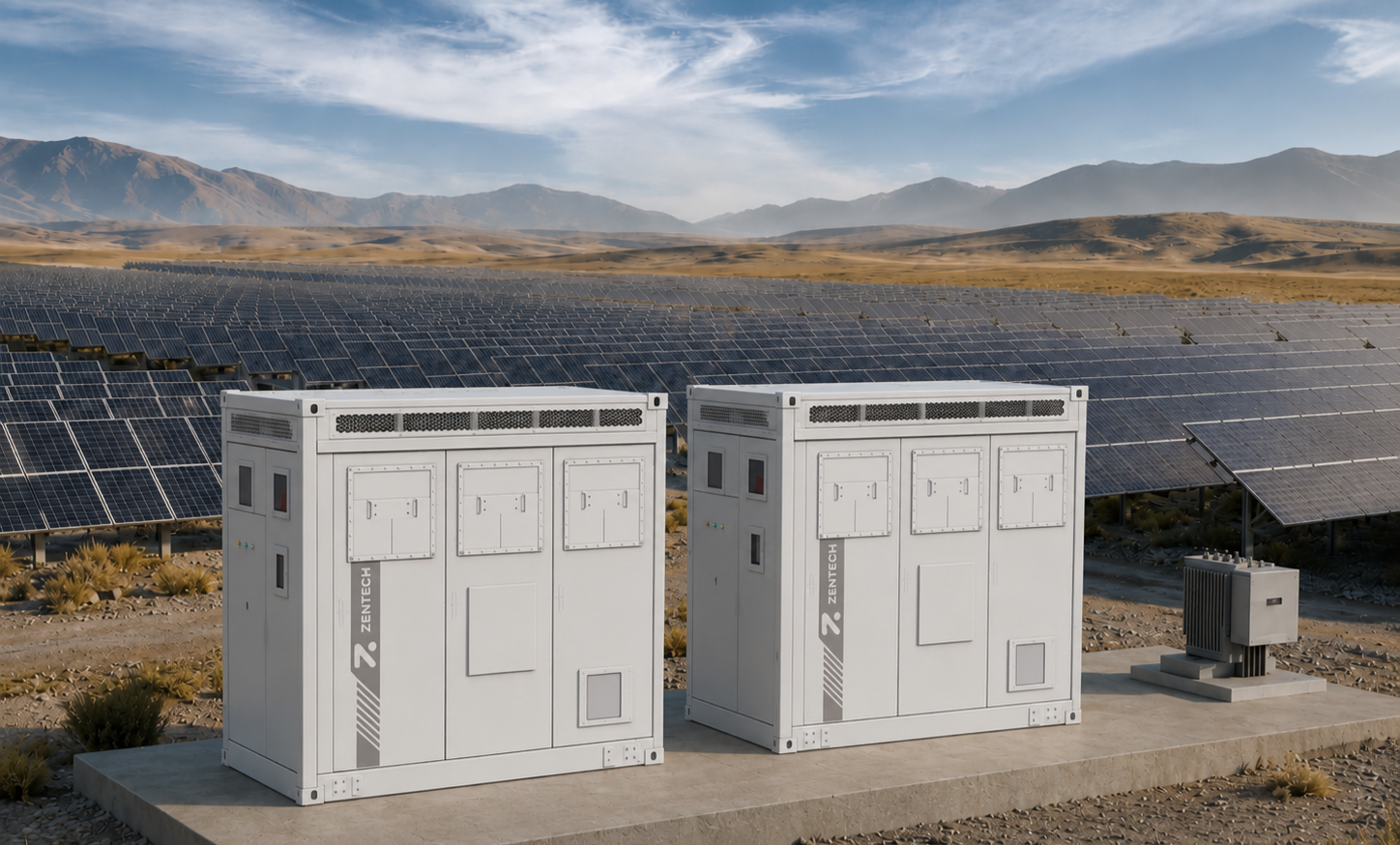
However, safety begins long before a system enters the test field. For ZETATECH, safety is built into the design of Xcube through multiple layers of protection. The system features DC input protection with load switches and fuses, liquid cooling for thermal management, active exhaust ventilation, aerosol fire suppression, and pack-level fire suppression. Its IP55 protection rating, with up to IP65 available as an option, further enhances protection against dust and water ingress, supporting reliable operation across diverse outdoor environments.
Rather than relying on a single safety mechanism, Xcube adopts a multi-layered protection approach, combining electrical protection, thermal management, ventilation, and fire suppression to enhance system resilience under abnormal operating conditions.
This design philosophy is particularly important for utility-scale applications, where effective safety measures at the system level can help reduce risks to equipment, personnel, and surrounding infrastructure.